

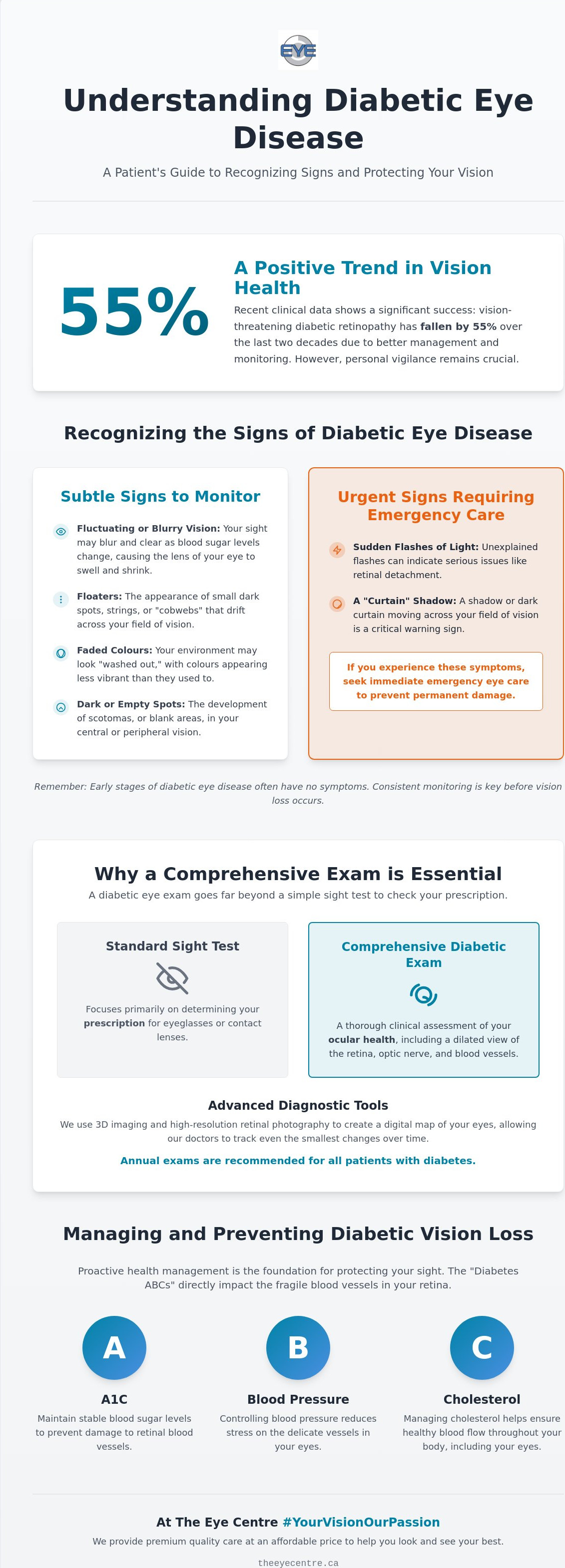
Recent clinical data from 2026 shows that vision-threatening diabetic retinopathy has fallen by 55% over the last two decades. This is encouraging news for anyone managing diabetes, yet the anxiety of losing your sight often lingers. You might find yourself wondering if a sudden bit of blurriness is just a result of a long day or one of the early signs of diabetic eye disease. It’s natural to feel concerned when your vision fluctuates, especially when you aren't sure exactly what to look for.
At The Eye Centre, we believe that your quality of vision is too important to ignore. This guide will help you recognize subtle symptoms and explain why professional monitoring is your most effective defence against vision loss. We will preview the differences between conditions like retinopathy and macular edema, and show you how advanced diagnostic tools provide clarity without the stress of the unknown. Whether you are visiting us in Saskatchewan or Alberta, our goal is to help you look and see your best through premium quality care at an affordable price. #YourVisionOurPassion
Key Takeaways
- Recognize early signs of diabetic eye disease, including fluctuating vision and the appearance of dark spots or strings in your field of sight.
- Understand how advanced tools like retinal photography allow your optometrist to track blood vessel health with clinical precision.
- Discover the lifestyle adjustments and "Diabetes ABCs" that help prevent vision loss and protect your ocular well-being.
- See how the team at The Eye Centre provides premium quality care at an affordable price to help you look and see your best. #YourVisionOurPassion
Recognizing the Subtle Signs of Diabetic Eye Disease
Identifying the signs of diabetic eye disease isn't always straightforward because the symptoms can change from day to day. One of the most common experiences for patients is fluctuating vision. When blood sugar levels are high or unstable, the lens of your eye can actually swell. This change in shape alters how light focuses on your retina, causing your sight to blur and then clear up again as your sugar levels stabilize. It is a frustrating cycle that many people mistake for simple fatigue or normal aging.
You might also notice the appearance of floaters. These look like small dark strings, spots, or cobwebs that drift across your field of vision when you try to look at a plain background. While floaters can happen as a natural part of aging, they are a significant indicator of potential issues in patients with diabetes. Other subtle shifts include a faded or "washed out" appearance in your environment. If colours no longer seem vibrant or if you notice dark, empty spots (scotomas) in your central vision, these are warning signs that retinal damage may be occurring. This often stems from Diabetic retinopathy, a condition that affects the small blood vessels in the back of the eye.
When "No Symptoms" Is Still a Warning
Early stages of diabetic eye conditions are frequently painless and invisible to the patient. You might feel your vision is perfectly fine, yet micro-aneurysms could be developing in the retinal tissue. Waiting for noticeable vision loss to occur often means the disease has already reached an advanced stage. Consistent monitoring is essential to catch these changes before they impact your daily life. At The Eye Centre #YourVisionOurPassion, we focus on early detection to protect your sight through premium quality care at an affordable price.
Sudden Changes Requiring Emergency Care
While some symptoms develop slowly, others require a sense of gentle urgency. If you experience sudden flashes of light or a shadow that feels like a curtain closing over your vision, you must act quickly. We encourage you to reach out to an emergency eye care provider immediately. These sudden changes can indicate a retinal detachment or a significant haemorrhage, both of which are medical emergencies that require prompt clinical intervention to prevent permanent damage.
Why a Comprehensive Diabetic Eye Exam Is Essential
A standard sight test is often confused with a medical eye exam, but the difference is significant for anyone living with diabetes. While a sight test focuses on your prescription for eyeglasses, a comprehensive diabetic eye exam is a thorough clinical assessment of your ocular health. This process allows our doctors to look beyond the surface and identify the signs of diabetic eye disease before they cause permanent vision loss. We prioritize premium quality with an affordable price to ensure every patient can access the care they need.
During a dilated exam, our team uses specialized drops to widen your pupils. This might feel a bit unusual, but it's a painless process that gives us a clear view of the retina, optic nerve, and blood vessels. By looking into the back of the eye, we can spot micro-aneurysms or small leaks that aren't visible during a routine check-up. At The Eye Centre #YourVisionOurPassion, we believe that understanding your eye health shouldn't be stressful. We walk you through every step so you know exactly what to expect.
Advanced Diagnostic Tools at The Eye Centre
We use advanced 3D imaging and high-resolution retinal photography to monitor your ocular health. These tools allow us to create a digital map of your eyes. Our doctors realize a personalized care plan for you by comparing these images over time to track even the smallest changes in your blood vessels. This level of detail is vital for managing conditions like retinopathy effectively. If you haven't had an assessment this year, you can connect with our team to find a time that works for you.
Frequency of Clinical Monitoring
For patients in Saskatchewan and Alberta, the standard clinical recommendation is to have a diabetic eye exam at least once a year. Regular monitoring is the most reliable way to catch issues early. You can read more about what happens during comprehensive eye exams in our detailed guide. Staying consistent with these appointments ensures that your vision remains clear and your eyes stay healthy for years to come.
Managing and Preventing Diabetic Vision Loss
Managing your health is the foundation for preventing vision loss. It starts with the "Diabetes ABCs," which focus on your A1C, blood pressure, and cholesterol. These factors directly impact the tiny, fragile blood vessels in your retina. Since these vascular issues can also affect other aspects of men's health, such as sexual performance, specialized clinics like FullMast offer support for those managing these systemic changes. When you keep these levels within a healthy range, you reduce the risk of developing the early signs of diabetic eye disease. Lifestyle choices play a massive role too. Quitting smoking and wearing UV-protected sunglasses are practical steps that protect your ocular health over the long term.
We provide clinical excellence through a community-based approach. Having a local eye doctor in Yorkton, Prince Albert, or Fort McMurray means your care team can identify the signs of diabetic eye disease while understanding your specific health history. We focus on providing premium quality with an affordable price, ensuring that medical eye care remains accessible to everyone in our community. Our clinics are equipped with advanced technology to monitor your progress and ensure your treatment plan remains effective as you age. This commitment to holistic well-being is shared by providers like Star Dental Care, who offer specialized resources on dental health and restorative options that contribute to a patient's overall quality of life.
Your Vision Is Our Passion
At The Eye Centre #YourVisionOurPassion, we want you to look and see with confidence. Our approach combines thorough clinical exams with a curated selection of designer eyewear. This dual focus ensures that while we protect your medical health, you also find frames that suit your personal style. To complement your confidence and self-care routine, you can check out Crystal Bright Smile for professional restorative and cosmetic dental treatments. We believe that caring for your eyes should be a positive experience that supports both your well-being and your daily lifestyle. Your quality of vision is too important to ignore.
Steps to Take After a Diagnosis
If you receive a diagnosis, coordination between your healthcare providers is essential. Our doctors realize that a new diagnosis can feel overwhelming, so we work closely with your family physician to ensure your ocular care is integrated into your broader health plan. We recommend that you select a location and book an appointment to establish a baseline for your ocular health. This proactive step helps us monitor changes and maintain your clarity of sight through every stage of your journey.
Protecting Your Sight for the Future
Recognizing the signs of diabetic eye disease is a vital first step, but professional intervention remains your strongest shield against vision loss. We've explored how subtle changes like blurriness and floaters often signal deeper issues that only a dilated clinical exam can confirm. By focusing on your "Diabetes ABCs" and utilizing advanced 3D retinal imaging, you can manage your ocular health with confidence. For patients who value a multidisciplinary approach to wellness, the Russell Health Collective provides evidence-based care that can support your broader health goals. Early detection doesn't just preserve your vision; it provides peace of mind for you and your family.
Since 1979, our team has served communities across Alberta and Saskatchewan with a commitment to clinical excellence. We offer evening and weekend appointments to fit your busy lifestyle, providing premium quality with an affordable price. Your quality of vision is too important to ignore, and we're here to help you look and see with clarity. Take the next step in your health journey and Book Your Comprehensive Diabetic Eye Exam Today at one of our convenient locations. At The Eye Centre #YourVisionOurPassion, your well-being is our priority.
Frequently Asked Questions
Can diabetic eye disease be reversed if caught early?
Early stages of diabetic retinal disease can be managed to prevent further vision loss, though physical damage to blood vessels isn't fully reversible. While you can't always undo the condition, clinical treatments can reduce retinal swelling and improve your sight. Identifying the signs of diabetic eye disease early allows our doctors to implement a personalized care plan before the condition progresses significantly. This proactive approach is the most reliable way to protect your long-term clarity.
Is a diabetic eye exam covered by provincial health insurance in Alberta or Saskatchewan?
Yes, residents of Alberta and Saskatchewan with a diabetes diagnosis generally have their annual eye exams covered by provincial health insurance. In Alberta, the Alberta Health Care Insurance Plan (AHCIP) covers medically necessary exams, while the Saskatchewan provincial health plan provides annual coverage for diabetic patients. We help you navigate these benefits so you can focus on your ocular health. This ensures you receive premium quality with an affordable price for all your vision needs.
How long does a diabetic eye exam usually take?
You should expect your appointment to last approximately 45 to 60 minutes. This includes time for the diagnostic tests, the dilation drops to take full effect, and a detailed discussion of your results with the optometrist. We use this time to conduct a thorough assessment using retinal photography and 3D imaging to ensure no detail is missed. Our clinics offer evening and weekend availability to make these essential visits more convenient for you.
Will I be able to drive home after my eyes are dilated during the exam?
We recommend arranging for a driver or using public transit following your appointment. Dilation drops cause temporary light sensitivity and blurred near vision that can last for several hours. While some patients feel capable of driving with dark sunglasses, having a ride is the safest way to ensure you return home comfortably after your clinical assessment. Detecting the signs of diabetic eye disease requires a dilated exam, and at The Eye Centre #YourVisionOurPassion, your safety is our primary concern throughout the process.


