

Did you know that one-third of Canadian adults are currently overdue for an eye exam, or have never had one at all? It's easy to assume your eyes are healthy if your vision feels clear, but many serious conditions develop without early symptoms. We know that finding time for appointments is challenging, and navigating provincial health coverage in provinces like Alberta or Saskatchewan can be confusing. At The Eye Centre #YourVisionOurPassion, we believe that your quality of vision is too important to ignore. This guide explains exactly how often should you get an eye exam to protect your sight at every stage of life.
You'll discover the specific frequency recommendations for infants, school-aged children, and adults based on current standards from the Canadian Association of Optometrists. We also provide a clear overview of when an exam is medically urgent and how to access premium quality with affordable price options at our local clinics. By understanding these guidelines, you can take a proactive approach to your health and ensure you continue to look and see with clarity.
Key Takeaways
- Understand the standard examination schedule for every life stage, from infants to seniors, to ensure your eyes remain healthy as you age.
- Learn exactly how often should you get an eye exam to maintain your vision and navigate provincial health coverage in Alberta and Saskatchewan.
- Identify specific medical conditions and risk factors, such as diabetes, that require more frequent monitoring beyond the standard two-year window.
- Discover why a comprehensive eye examination involves more than a sight test, utilizing advanced tools like 3D imaging for a deeper look at your health.
- See how the professional team At The Eye Centre #YourVisionOurPassion helps you look and see your best with premium quality with affordable price eyewear.
Recommended Eye Examination Frequency by Age and Life Stage
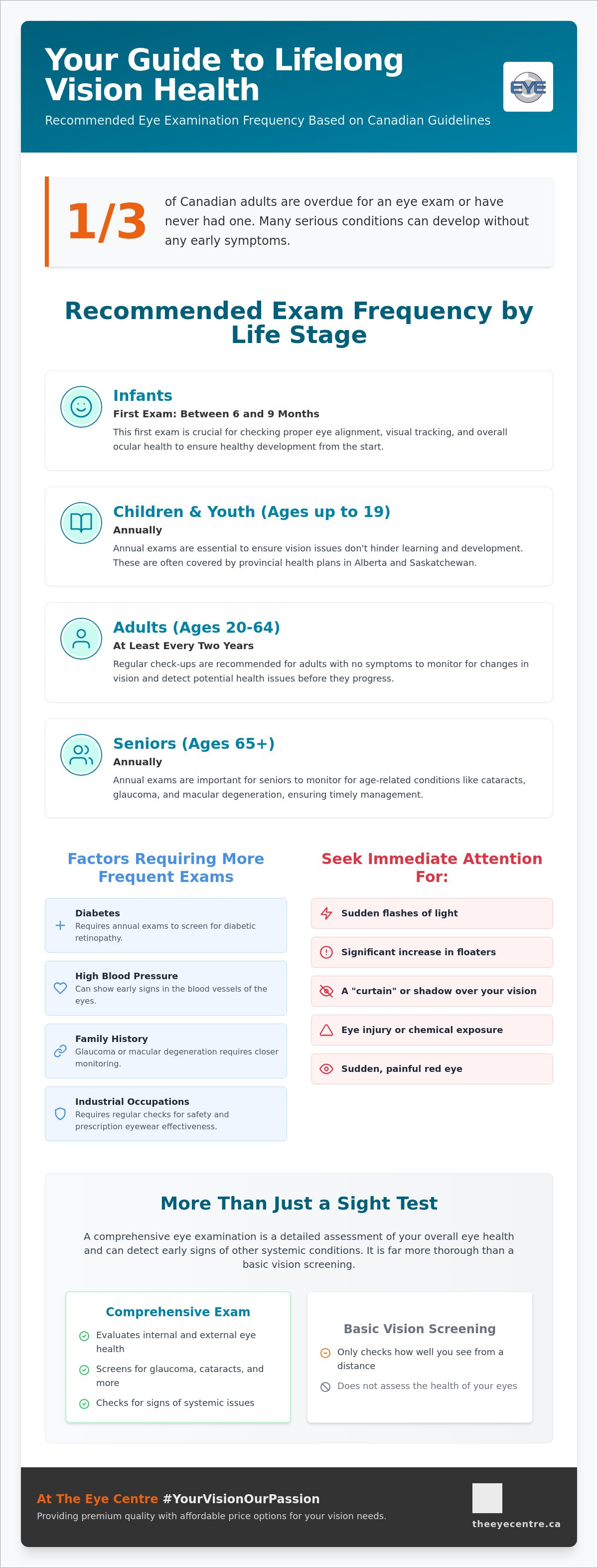
Determining how often should you get an eye exam depends on your age, medical history, and current ocular health status. While the Canadian Association of Optometrists (CAO) provides standard guidelines for preventative care, we realize that every patient has a unique visual profile. At The Eye Centre #YourVisionOurPassion, we look beyond your prescription to your overall well-being. A comprehensive eye examination can often detect early signs of systemic issues like hypertension or certain cancers before they affect your daily life.
Children and Youth (Ages 0–19)
Visual development is critical during the early years. Infants should have their first appointment between 6 and 9 months of age to check for proper eye alignment and health. For school-aged children, annual exams are necessary to ensure vision issues don't hinder their ability to learn or play. In Alberta and Saskatchewan, annual exams for children are often covered by provincial health plans. This support helps families maintain a consistent schedule for their children's eye health without worry.
Adults and Seniors (Ages 20 and Older)
Adults aged 20 to 64 with no symptoms should visit an eye doctor at least every two years. However, those working in industrial sectors may require more frequent visits or specialized safety eyewear to protect their eyes on the job. Once you reach age 65, the risk for conditions like cataracts and glaucoma increases. Seniors should maintain an annual schedule to monitor for these changes. Knowing how often should you get an eye exam allows you to take control of your long-term health. Your quality of vision is too important to ignore. Read more about our Comprehensive Eye Exams in Fort McMurray, Prince Albert, and Yorkton for age-specific care. We provide premium quality with affordable price options to ensure you look and see your best as you age.
Recognizing Risk Factors and Symptoms That Require Immediate Attention
While age-based guidelines provide a helpful baseline, your personal health profile may require a more frequent schedule. Certain medical conditions necessitate a shift away from the standard two-year window for adults. For example, individuals with diabetes require annual diabetic eye exams to monitor for retinopathy, a condition that can lead to permanent vision loss if left unmanaged. Family history also plays a significant role; if glaucoma or macular degeneration runs in your family, attentive monitoring becomes a priority. Determining how often should you get an eye exam is a decision we make together based on these clinical factors.
Medical and Lifestyle Risk Factors
Systemic health issues like high blood pressure often manifest early signs in the eyes, making your optometrist a key partner in your overall health team. Lifestyle factors also impact your vision. Industrial workers in regions like Fort McMurray face unique challenges and should prioritize regular exams to ensure their safety eyewear is accurate and effective. At The Eye Centre #YourVisionOurPassion, we provide specialized clinical care for high-risk patients and those working in demanding environments. We offer premium quality with affordable price options for protective gear, ensuring you look and see your best while staying safe on the job.
When to Seek Emergency Eye Care
Your quality of vision is too important to ignore, and sometimes you cannot wait for a routine appointment. Sudden onset of flashes, a significant increase in floaters, or the feeling of a "curtain" over your vision are serious symptoms that require an immediate eye appointment. These could indicate a retinal detachment, which is a clinical emergency. Other urgent issues include eye injuries, chemical exposure, or sudden painful redness. If you experience these, use our guide to find an Eye Doctor Near Me to locate the nearest facility for urgent needs. You can also contact our team directly for guidance on emergency situations.
What to Expect During a Comprehensive Eye Examination at The Eye Centre
A comprehensive eye examination at our clinics is more than a simple sight test or vision screening. While a basic screening only checks how well you see, our thorough process evaluates the internal and external health of your eyes. Knowing how often should you get an eye exam is the first step; the second is ensuring the care you receive is detailed and personalized. At The Eye Centre #YourVisionOurPassion, we combine clinical authority with a welcoming environment to ensure you feel comfortable throughout your visit. Our goal is to provide premium quality with affordable price options for both your medical care and your eyewear.
Advanced Diagnostic Technology
We utilize advanced diagnostic tools, including 3D imaging and retinal photography, to provide a clear picture of your ocular health. Retinal imaging allows our doctors to see the internal structures of the eye in great detail, which is essential for accurate glaucoma and macular degeneration screenings. Retinal photography is a non-invasive way to track eye health over time by documenting changes in the retina that might otherwise go unnoticed. These tools help us identify potential issues early, often before you experience any changes in your vision, allowing for more effective management of your long-term eye health.
Personalized Vision Solutions
Our commitment to your care continues after the clinical portion of your exam. We aim to help you look and see your best through personalized management and high-quality optical products. Following your exam, our experienced team provides expert contact lens fittings or helps you select from our collection of designer frames. We realize that your eyewear is a reflection of your personal style as much as it is a medical necessity.
In our Prince Albert and Yorkton offices, you can explore an extensive selection of frames from names like Gucci, Prada, and Tom Ford. Whether you need prescription sunglasses or daily disposable contact lenses, we provide a reliable source for all your visual needs. Visit our Contact Us page to schedule your visit at a time that suits your lifestyle, including evening and weekend options at many of our locations across Alberta and Saskatchewan.
Protect Your Sight for Years to Come
Maintaining a regular eye care schedule is a vital part of your overall health. By following the guidelines for your specific life stage and recognizing the risk factors that apply to your health or career, you can prevent vision loss. Whether you need specialized diabetic monitoring or professional contact lens fittings for all ages, knowing how often should you get an eye exam helps you stay proactive. At The Eye Centre #YourVisionOurPassion, we've served the Fort McMurray community since 1979 and remain committed to helping you look and see with clarity.
Our clinics offer evening and weekend appointments to accommodate your busy lifestyle. We provide premium quality with affordable price options across our entire range of services and designer frames. Your quality of vision is too important to ignore. Take the next step in protecting your eyes and book your comprehensive eye exam at one of our locations today. We're ready to provide the attentive care you and your family deserve.
Frequently Asked Questions
Is an eye exam covered by provincial health in Alberta or Saskatchewan?
Provincial health plans in Alberta and Saskatchewan provide coverage for specific age groups and medical necessities. Alberta Health Care Insurance covers one annual comprehensive exam for children under 19 and seniors aged 65 and older; Saskatchewan offers similar annual coverage for children under 18. For adults between these ages, coverage is typically reserved for medically necessary visits, such as diabetic eye exams or emergency care. At The Eye Centre #YourVisionOurPassion, we help you understand these provincial limits while providing premium quality with affordable price options for all patients.
Can I get an eye exam if I don't currently wear glasses or contacts?
You should schedule an appointment even if you don't currently use vision correction. Many serious eye conditions develop without obvious symptoms, and a professional assessment is the only way to detect these issues early. Determining how often should you get an eye exam is about more than just updating a prescription; it's a vital part of your preventative health routine. Regular visits ensure your eyes remain healthy and help our team identify systemic issues like high blood pressure or diabetes before they affect your daily life.
What is the difference between a vision screening and a comprehensive eye exam?
A vision screening is a basic sight test often performed in schools or at driver's licensing offices to identify obvious vision problems. In contrast, a comprehensive eye examination is a medical assessment that evaluates the internal and external health of your eyes. At our clinics, we utilize advanced tools like retinal photography and 3D imaging to check for conditions such as glaucoma and macular degeneration. While a screening might suggest you need glasses, only a full exam provides the clinical depth needed to protect your long-term quality of vision.
How long does a standard eye examination usually take?
A thorough comprehensive exam typically takes between 30 and 60 minutes. This duration allows our experienced optometrists to perform all necessary clinical tests and discuss your results in detail. If you require additional services, such as professional contact lens fittings or assistance selecting designer frames from our retail gallery, you may want to allow for extra time. We aim to provide an efficient experience that doesn't compromise on the attentive, personalized care that our community expects from a trusted local expert.


