By 2030, every baby boomer will be over the age of 65, which significantly increases the number of Canadians at risk for serious ocular conditions. It's natural to feel uncertain about whether a new blur or a stray floater is just a part of aging or a sign of something more serious. Many people don't realize that approximately 200 million people worldwide are already living with age-related macular degeneration. Recognizing the signs of common eye diseases is the first step in protecting your independence. At The Eye Centre #YourVisionOurPassion, we believe your quality of vision is too important to ignore.
We understand that medical jargon is often confusing and the fear of vision loss is overwhelming. This guide will help you identify red-flag symptoms and explain how clinical diagnostic imaging provides the full picture of your health. You'll learn how our attentive team uses advanced technology to monitor your sight, offering premium quality with affordable price. We will preview specific warnings for conditions like glaucoma and AMD so you can seek the care you need without delay. Our goal is to ensure you continue to look and see your best through every stage of life.
Key Takeaways
- Identify the subtle signs of common eye diseases that often lack obvious symptoms during the early, most treatable stages.
- Understand the critical differences between routine refractive errors and progressive conditions like glaucoma or macular degeneration.
- Learn why a comprehensive eye exam involves advanced imaging to detect health issues that a simple vision screening might miss.
- Discover how to balance your medical needs with functional eyewear that offers premium quality with affordable price.
- Take the first step toward long-term vision protection by recognizing when a symptom requires professional intervention. At The Eye Centre #YourVisionOurPassion.
Recognizing Subtle Warnings: Signs of Common Eye Diseases
Many vision-threatening conditions develop without any noticeable pain or immediate blurriness. This reality makes regular screenings essential for patients across Alberta and Saskatchewan, where dry prairie air and high UV exposure can influence your risk profile. While a simple change in your prescription might fix a blurry road sign, the signs of common eye diseases are often much more subtle. At The Eye Centre #YourVisionOurPassion, we focus on identifying these microscopic changes before they impact your daily life. Your quality of vision is too important to ignore, and early detection is the most effective way to preserve it.
It's vital to distinguish between refractive errors, like nearsightedness or astigmatism, and progressive ocular diseases. While refractive errors are easily managed with prescription eyeglasses, progressive diseases can lead to permanent loss of sight if they aren't monitored by a professional. For those interested in the clinical breadth of these conditions, you can review a comprehensive list of eye diseases to see how varied these risks can be. We provide premium quality with affordable price for all our clinical assessments, ensuring that expert care remains accessible to our community.
Visual Distortions and Clarity Issues
Recognizing wavy lines or "bent" shapes in your central vision is a significant warning for age-related macular degeneration. If straight lines, such as door frames or window blinds, appear distorted, you should contact us immediately. Clouded or hazy vision that doesn't improve with new glasses is another red flag. Don't dismiss persistent vision changes as simple eyestrain; they often indicate underlying health shifts that require a medical evaluation.
Physical Sensations and External Changes
Chronic redness or a persistent gritty sensation often requires targeted dry eye therapy rather than just over-the-counter drops. Sudden light sensitivity or pain in one or both eyes is never normal and should be treated with urgency. Whether you notice a change in the appearance of your pupils or feel a dull ache behind the eye, these physical sensations are key indicators that your ocular health needs attention.
Clinical Red Flags for Major Ocular Conditions
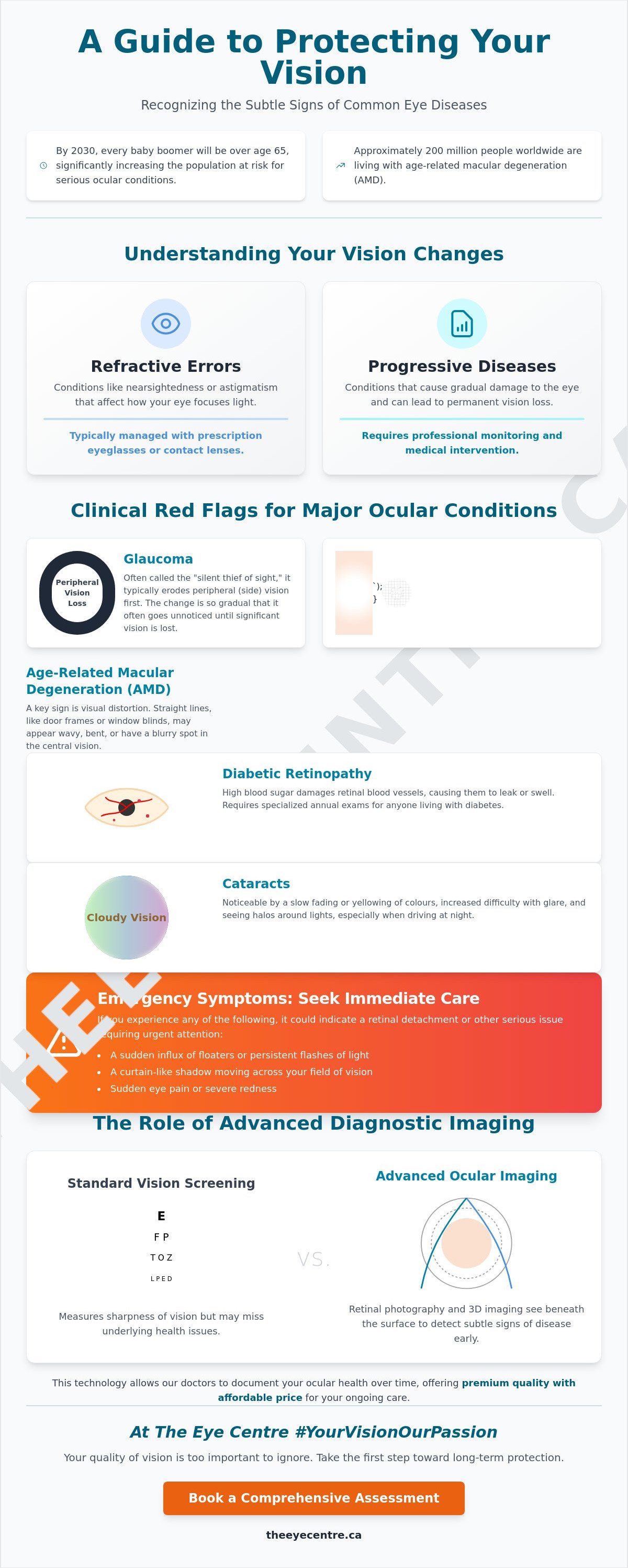
Understanding the specific signs of common eye diseases helps you know when to transition from observation to action. According to the National Eye Institute, many vision issues remain undetected until they reach an advanced stage. At The Eye Centre #YourVisionOurPassion, we prioritize early identification through several key indicators:
- Glaucoma: Often called the "silent thief of sight," this condition typically erodes peripheral vision first. Because the change is so gradual, many patients don't realize they're losing sight until their central vision is impacted.
- Age-Related Macular Degeneration (AMD): This disease presents in two forms. The "dry" form involves a slow thinning of the macula, while the "wet" form is caused by abnormal blood vessel growth and requires urgent clinical care.
- Diabetic Retinopathy: Residents living with diabetes require specialized annual examinations. High blood sugar can damage retinal blood vessels, leading to swelling or leaking that threatens your sight.
- Cataracts: You might notice a slow fading of colours or increased difficulty with glare and halos around lights, particularly during night driving in winter conditions.
Emergency Symptoms: When to Seek Immediate Care
If you experience a sudden influx of floaters or persistent flashes of light, it could indicate a retinal detachment. A curtain-like shadow moving across your field of vision is a critical emergency requiring immediate attention. We provide emergency eye care in Fort McMurray and our other locations to manage these urgent situations. Prompt intervention is often the deciding factor in saving your sight.
The Role of Advanced Diagnostic Imaging
We use retinal photography and 3D imaging to see beneath the visible surface of the eye. This technology allows our doctors to document your ocular health over time and identify subtle trends that a standard test would miss. By tracking these changes, we offer premium quality with affordable price for your ongoing care. If you haven't had your ocular health documented recently, you can book a comprehensive assessment to establish your baseline.
Protecting Your Vision at a Local Ocular Health Centre
A comprehensive eye exam is much more than a simple prescription update for new glasses. While a vision screening might tell you if you can read the bottom line of a chart, it cannot detect the early signs of common eye diseases that occur deep within the ocular structure. Our clinics in Prince Albert and Yorkton provide attentive care for the whole family, ensuring that both children and seniors receive the specialized monitoring they require. We believe that everyone should have access to medical expertise, which is why we offer premium quality with affordable price for both our clinical services and our selection of designer eyewear.
Managing your health doesn't mean you have to sacrifice your lifestyle or personal style. By integrating clinical care with professional optical fittings, we help you find solutions that protect your sight while meeting your daily needs. For those looking to understand the full spectrum of risks, the National Eye Institute provides a helpful directory of Common Eye Conditions and Diseases. At our centres, we translate this medical knowledge into practical, personalized care for our local community.
Personalized Vision Solutions
We match your clinical results to specific lens technologies that improve your daily experience. This includes digital lenses designed for distortion-free vision, which are particularly helpful for those who spend long hours on digital devices. Protection is also vital outside the exam room. Selecting designer sunglasses that provide 100% UV protection is a necessity in the intense prairie sun. These tools ensure you look and see your best while preventing long-term damage from environmental factors.
Realize Your Vision Potential
Your quality of vision is too important to ignore, regardless of how clear your sight feels today. Many conditions are manageable when caught early, but they require a proactive approach and consistent documentation. At The Eye Centre #YourVisionOurPassion, we are committed to being the long-term guardian of your ocular health. We invite you to Find a location near you to book an appointment and establish a baseline for your future sight. Our team is ready to provide the reliable, professional care you deserve.
Take Action for Your Ocular Health
Your vision is a vital part of your independence, and it deserves proactive protection. We've discussed how identifying the signs of common eye diseases early can prevent permanent sight loss. Whether it's recognizing the subtle distortions of AMD or the silent progression of glaucoma, clinical intervention is the only way to realize the full picture of your health. At The Eye Centre #YourVisionOurPassion, we serve the communities of Fort McMurray, Prince Albert, and Yorkton with dedicated care.
Our clinics use advanced diagnostic tools, including 3D retinal imaging, to monitor your sight with precision. We understand your busy lifestyle; we offer evening and weekend availability to ensure you can access premium quality with affordable price when it's most convenient for you. Your quality of vision is too important to ignore. Don't wait for symptoms to become emergencies. Book your comprehensive eye examination at The Eye Centre today. We look forward to helping you look and see your best for years to come.
Frequently Asked Questions
What are the most common signs of eye disease in adults?
Common indicators include frequent headaches, squinting to see road signs, and difficulty reading in low light conditions. You might also notice that your eyes feel tired after using a computer or that your night vision has changed significantly. While these are often signs of common eye diseases, they can also indicate a simple need for a new prescription. At The Eye Centre #YourVisionOurPassion, we evaluate these changes to ensure your sight remains protected.
Can I have an eye disease if my vision still feels clear?
Yes, many serious conditions don't impact your central clarity until significant damage has already occurred. Glaucoma, for instance, often begins by eroding peripheral sight so gradually that you won't notice the change in your daily life. Regular screenings are the only way to detect these "silent" issues before they cause permanent loss. Your quality of vision is too important to ignore, even if you feel your current sight is perfectly clear.
How often should I visit an ocular health centre for a check-up?
Adults should typically have a comprehensive exam every one to two years, though seniors and those with diabetes require annual visits. Factors like family history or existing health conditions can increase this frequency. Regular check-ups allow us to document your health over time and catch signs of common eye diseases before they progress. We provide premium quality with affordable price to make these essential visits accessible for every family.
Are flashes and floaters always a sign of a serious problem?
While small floaters are common as we age, a sudden increase in their number or the appearance of light flashes is a medical emergency. These symptoms can indicate a retinal tear or detachment, which requires immediate clinical intervention to prevent permanent blindness. It's always safer to have these changes evaluated by a professional right away. At The Eye Centre #YourVisionOurPassion, we prioritize emergency assessments to help you preserve your sight and peace of mind.
What is the difference between a routine eye test and a clinical ocular health exam?
A routine eye test primarily focuses on your prescription for eyeglasses or contact lenses to improve your clarity. In contrast, a clinical ocular health exam uses advanced tools like 3D imaging to inspect the internal structures of your eye for signs of disease. This thorough approach allows doctors to identify issues like thinning of the retina or pressure changes. We combine both aspects to ensure you look and see your best while maintaining long-term health.


