
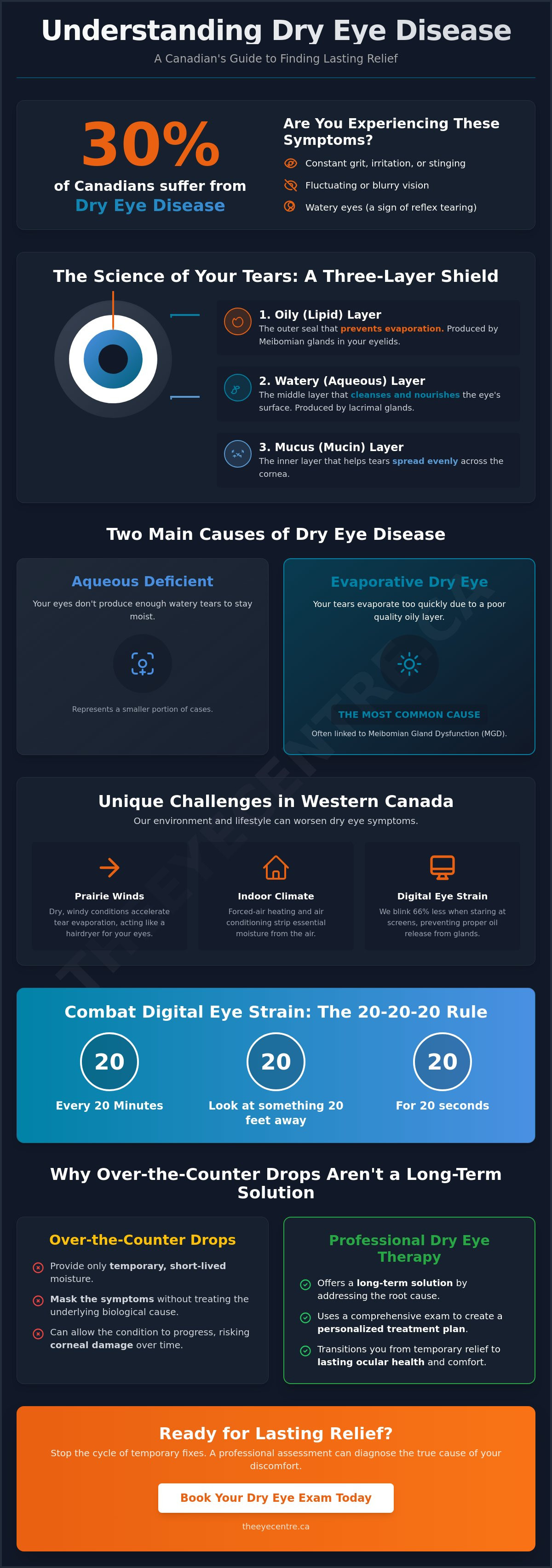
Did you know that approximately 30% of Canadians currently live with the constant grit and irritation of dry eye? You have likely tried every over-the-counter drop on the shelf, only to find that the relief lasts for minutes before the stinging returns during your commute or while you are focused at work. It is exhausting to deal with fluctuating vision that makes simple tasks feel like a struggle. We understand that your quality of vision is too important to ignore, and relying on temporary fixes often feels like a losing battle.
This article will show you how to find a long-term solution by addressing the biological root causes of your discomfort through clinical therapy and lifestyle adjustments. We will look at the latest 2026 diagnostic trends, the specific environmental triggers we face here in Canada, and how to tell when it is time to book a professional exam at our centre. You deserve to see and feel your best without the constant distraction of ocular discomfort.
Key Takeaways
- Learn how the biology of your tear film works and why watery eyes are frequently a hidden symptom of chronic dehydration.
- Identify the specific environmental factors in Western Canada, from indoor heating to prairie winds, that worsen dry eye conditions.
- Discover why clinical therapies offer a more effective, long-term solution than over-the-counter artificial tears.
- Understand the importance of a comprehensive eye exam in diagnosing the root cause of your discomfort for a personalized treatment plan.
- Gain the knowledge needed to transition from temporary relief to lasting ocular health and clear, comfortable vision.
What is Dry Eye? Understanding the Science of Tears
Many patients at our centre are surprised to learn that dry eye is a chronic condition where tears fail to provide adequate lubrication. It is not merely a temporary annoyance but a sophisticated biological imbalance. Dry eye syndrome is a multifactorial condition affecting the ocular surface and tear film quality. When your tears lack the proper structure, they cannot protect the eye, leading to a cycle of inflammation and discomfort.
You might find it confusing if your eyes water constantly while feeling scratchy. This is known as reflex tearing. When the eye becomes too dry, the brain sends an emergency signal to the lacrimal glands to flood the surface. Unfortunately, these emergency tears are mostly water and lack the essential oils needed to stick to the eye. They simply roll down your cheek, leaving the surface just as parched as before. This tear film instability is the primary driver of the burning and blurred vision you experience throughout the day.
The Three Essential Layers of Your Tear Film
Your tears are a complex shield composed of three distinct layers that must work in harmony:
- The Oily (Lipid) Layer: This outer layer is produced by your meibomian glands. It acts as a seal to prevent your tears from evaporating too quickly.
- The Watery (Aqueous) Layer: Produced by the lacrimal glands, this middle layer cleanses the eye and washes away irritants.
- The Mucus Layer: This base layer ensures that tears spread evenly across the entire surface of the cornea.
Aqueous Deficient vs. Evaporative Dry Eye
There are two main ways this system fails. Aqueous deficient dry eye occurs when your eyes don't produce enough watery volume. However, the most common culprit is evaporative dry eye. This is typically caused by Meibomian Gland Dysfunction (MGD), a condition where the oil-producing glands become blocked. Without that critical oily seal, your tears evaporate almost as soon as you blink, leaving your eyes exposed to the elements.
Common Causes and Western Canadian Environmental Triggers
Living in Western Canada presents unique challenges for your ocular health. The dry, windy conditions common in cities like Fort McMurray, Prince Albert, and Yorkton act like a giant hairdryer for your eyes, accelerating tear evaporation. This environmental stress is often compounded by our reliance on indoor heating during long winters and air conditioning in the summer, both of which strip essential moisture from the air. According to this Dry Eye Syndrome medical review, these external factors play a significant role in triggering or worsening chronic symptoms.
It's not just the wind outside that causes dry eye; internal factors matter too. Common medications like antihistamines for seasonal allergies or certain blood pressure treatments can unintentionally reduce your body's natural tear production. Additionally, hormonal shifts, particularly during menopause, can alter the composition of your tear film and lead to sudden discomfort. If you've noticed a change in how your eyes feel, it's worth reviewing your current health profile during a comprehensive eye exam at one of our locations.
Digital Eye Strain in the Modern Workplace
Our modern workplace habits are often at odds with our biology. Research shows we blink approximately 66% less when focused on digital screens. This lack of blinking prevents the meibomian glands from releasing the oils needed to protect your eyes. We recommend the 20-20-20 rule: every 20 minutes, look at something 20 feet away for 20 seconds. If your office setup is causing strain, a workplace vision assessment can help you find relief.
The Role of Protective Eyewear
You can fight back against the prairie wind with the right gear. High-quality wrap-around sunglasses from brands like Oakley or Maui Jim do more than just look good; they act as a physical windbreak to slow down evaporation. Reducing glare also prevents constant squinting, which can lead to muscle fatigue. We believe that fashion and function should go hand-in-hand to help you look and see your best while protecting your long-term eye health.
Professional Dry Eye Therapy: Beyond Over-the-Counter Drops
If you find yourself reaching for artificial tears multiple times an hour, you are likely just masking a deeper problem. While over-the-counter drops can provide a few minutes of moisture, they don't address the biological root of the issue. Relying on these temporary fixes often allows the underlying condition to progress. A professional dry eye assessment is essential to determine whether your discomfort stems from a lack of tear volume or poor tear quality. Without intervention, chronic inflammation can lead to permanent corneal damage and scarring, which may affect your vision long-term.
Clinical management at our centre focuses on restoring the natural balance of your tear film. We often recommend targeted therapies such as medical-grade warm compresses and specific lid hygiene routines. These treatments are designed to soften blockages in the meibomian glands and reduce the bacterial load on the eyelids. By improving the health of the ocular surface, we help your eyes produce the high-quality tears they need to stay comfortable throughout the day.
Advanced Diagnostic Tools at Your Optometry Centre
We use sophisticated technology to move beyond guesswork. Meibography allows us to capture high-resolution images of your oil glands to see if they are thinning or blocked. We also utilize tear osmolarity testing, which measures the concentration of salt in your tears. Higher salt levels are a clear clinical marker of dry eye disease. These insights allow us to create a treatment plan tailored to your specific biology. We invite you to book an appointment for a personalized assessment at one of our locations.
Long-Term Management and Prevention
Lasting relief often requires a combination of clinical care and simple lifestyle changes. Adding high-quality Omega-3 supplements to your diet can significantly improve the consistency of the oils your glands produce. Environmental control is also vital, especially during the harsh winters in Saskatchewan and Alberta. Using a humidifier in your bedroom or office helps counteract the drying effects of indoor heating. Remember, your quality of vision is too important to ignore. Taking proactive steps today ensures your eyes stay healthy and comfortable for years to come.
Take Control of Your Ocular Comfort
Managing your ocular health shouldn't be a guessing game of trial and error with pharmacy aisle drops. You now understand how the unique prairie climate accelerates tear evaporation and why a clinical approach is necessary to restore your tear film's biological balance. Since 1979, we have served the Fort McMurray community with advanced optometric care, and we deeply understand the specific environmental challenges our patients face across Alberta and Saskatchewan. Our expert optometrists specialize in clinical ocular health management and offer comprehensive therapy tailored to our local conditions.
Your quality of vision is too important to ignore, and finding lasting relief for dry eye starts with a precise, professional diagnosis. Our team is dedicated to providing you with the attentive care and modern technology needed to protect your long-term sight. Book your comprehensive dry eye assessment at The Eye Centre today to move beyond temporary fixes and find a solution that works. We look forward to helping you look and see your best in every season.
Frequently Asked Questions
Can dry eye cause permanent damage to my vision?
Yes, untreated chronic dry eye can lead to serious complications that threaten your sight. Constant inflammation and a lack of proper lubrication may cause corneal abrasions, ulcers, and in severe cases, permanent scarring. It is a progressive condition that requires active management. Seeking professional care early prevents these long-term issues and ensures your eyes remain healthy as you age.
Why do my eyes water so much if they are supposedly dry?
Excessive watering is actually a reflex response to an unstable tear film. When the surface of your eye becomes too irritated or dry, your brain triggers the lacrimal glands to produce a flood of "emergency" tears. Because these tears lack the essential oils needed to adhere to the eye, they simply run down your face without providing any real relief. This cycle usually indicates a problem with your tear quality rather than quantity.
Are there specific vitamins or supplements that help with dry eye?
Omega-3 fatty acids are the most effective supplements for improving the health of your tear film. These essential fats help reduce ocular inflammation and support the meibomian glands in producing high-quality oils. Many of our patients find that consistent use of high-quality fish oil or flaxseed oil significantly reduces their dry eye symptoms. Always consult with your optometrist before starting a new supplement routine to ensure it is right for you.
How do I know if I need a prescription eye drop instead of over-the-counter ones?
You likely need a professional intervention if you find yourself using over-the-counter drops more than four times a day without feeling better. Prescription treatments are designed to address the underlying causes of dry eye, such as chronic inflammation, rather than just providing a temporary mask of moisture. If your vision constantly fluctuates or your eyes feel gritty during your daily commute, it is time to move beyond basic lubricants and seek a clinical solution.


