A simple vision screening is not a medical evaluation, even though many people mistake the two. Understanding exactly what happens during an eye exam is the first step toward long-term clarity and genuine peace of mind regarding your health. At The Eye Centre #YourVisionOurPassion, we believe your quality of vision is too important to ignore. It's common to feel some uncertainty about what an optometrist looks for, especially when it comes to silent conditions like glaucoma, but a comprehensive checkup is a comfortable, family-friendly process.
You probably realize that proactive care is better than reactive treatment, yet navigating provincial health coverage can feel complicated. This guide identifies the essential steps of a thorough ocular health evaluation and explains why a professional exam is vital for your vision. We'll walk through the diagnostic process, explain current coverage for Alberta and Saskatchewan residents, and show you how to find a personalized vision solution that offers premium quality with an affordable price.
Key Takeaways
- Learn why clear vision does not always mean healthy eyes and why a comprehensive medical evaluation is necessary to protect your sight.
- Gain a clear understanding of what happens during an eye exam to help reduce anxiety and prepare for your next visit.
- Discover the specific tests used for pediatric, senior, and diabetic patients to identify genetic risks and vision loss early.
- Find out how your occupation or local environment, like industrial work in Fort McMurray, changes your requirements for safety eyewear.
- See how to achieve personalized vision solutions at The Eye Centre #YourVisionOurPassion, combining premium quality with an affordable price.
The Difference Between a Basic Screening and a Comprehensive Eye Check Up
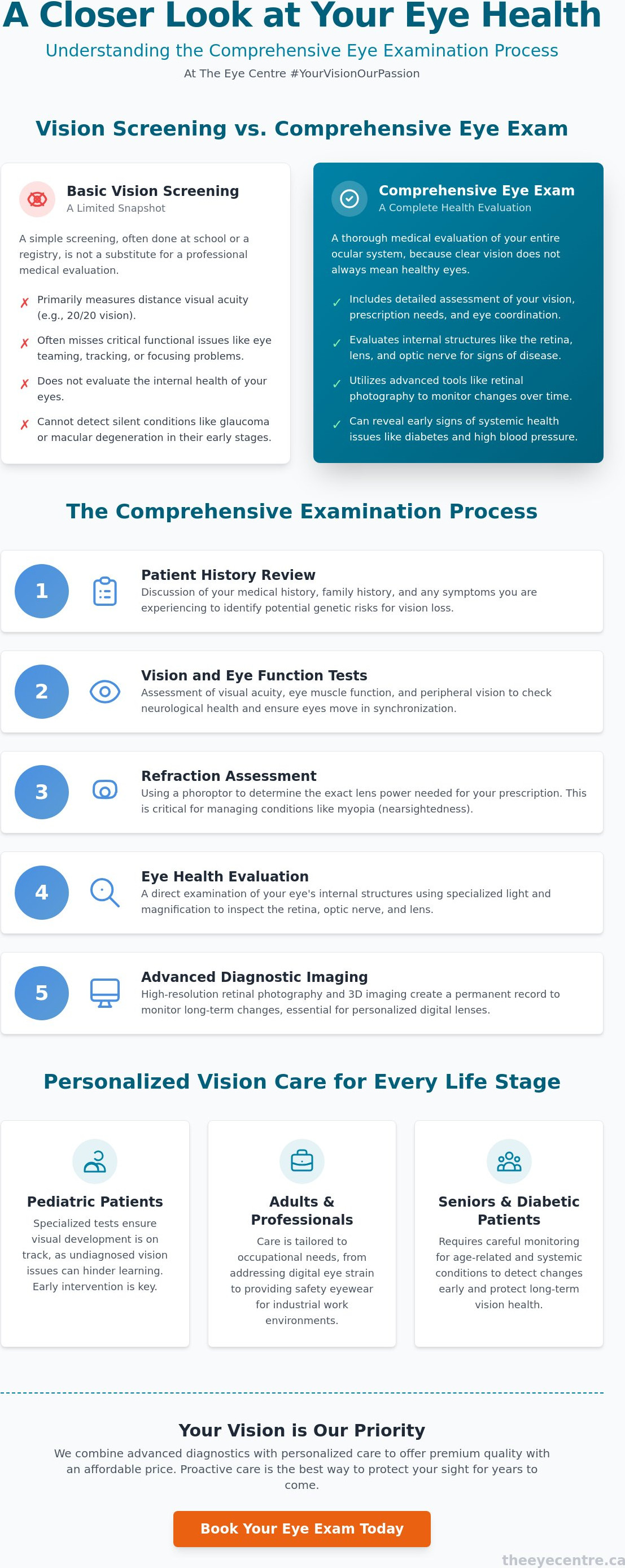
Many people assume that seeing 20/20 means their eyes are perfectly healthy. However, a comprehensive eye examination involves a medical evaluation of your entire ocular system, not just your ability to read letters on a wall. Understanding what happens during an eye exam helps you realize that clear vision does not always correlate with healthy eyes. Conditions like glaucoma or macular degeneration often develop without early symptoms. Preventative care is the only way to detect these changes before they impact your lifestyle.
We use retinal photography to capture high-resolution images of the back of your eye. This creates a permanent record that allows our team to monitor long-term ocular changes with precision. By comparing these images over time, we can spot subtle shifts that might otherwise go unnoticed. This level of detail is essential for maintaining your quality of vision as you age.
Why School Vision Screenings Are Not a Substitute for Professional Care
A school vision screening is a useful tool, but it's limited in scope. These tests primarily measure distance visual acuity. They often miss functional issues such as eye teaming, tracking, or focusing problems that can hinder a child's learning. We encourage parents to book a comprehensive eye exam to ensure their child has the visual foundation needed for development. Early intervention can prevent long-term academic struggles caused by undiagnosed vision issues.
Advanced Diagnostic Tools in Modern Optometry
Modern optometry relies on sophisticated technology to provide a complete picture of your health. Advanced 3D imaging is a central part of what happens during an eye exam, allowing our optometrists to see beneath the surface of the retina. These results also help us prescribe digital lenses. These lenses are crafted to provide optimized, distortion-free vision based on your specific requirements. At The Eye Centre #YourVisionOurPassion, we use this technology to personalize every patient experience, ensuring you receive premium quality with an affordable price.
Essential Components of a Thorough Ocular Health Examination
The process begins with a detailed review of your medical and family history. This step is vital for identifying genetic risks for vision loss, such as a family history of retinal detachment or cataracts. When considering Essential Components of a Thorough Ocular Health Examination, your optometrist also evaluates eye muscle function and peripheral vision. These tests check your neurological health and ensure your eyes move in synchronization. A direct examination of internal structures follows, where specialized light and magnification allow for a close look at the lens, retina, and optic nerve.
Clinical Testing for Vision and Eye Coordination
Refining your prescription involves using a phoroptor, which is the instrument containing various lenses. This determines the exact power needed for your daily activities. For patients requiring myopia management, these tests are critical to track the progression of nearsightedness. Optometrists also check for weak eye muscles or poor focus control, which can lead to headaches or digital eye strain. Understanding what happens during an eye exam ensures you realize that every test serves a specific purpose in stabilizing your vision.
Monitoring Ocular Health and Managing Symptoms
An eye exam can reveal early signs of systemic issues like diabetes or high blood pressure before they affect your body elsewhere. Optometrists identify chronic symptoms, such as persistent irritation or redness, through careful observation. While our facility does not offer dry eye treatment, we excel at identifying the underlying causes of ocular discomfort and suggesting lifestyle adjustments. At The Eye Centre #YourVisionOurPassion, we ensure all follow-up care provides premium quality with affordable price options. If you haven't had a checkup recently, you can contact us to book your next appointment.
Personalized Vision Care for Every Life Stage in Alberta and Saskatchewan
Your ocular needs evolve as you age, which is why we customize what happens during an eye exam based on your specific life stage. Pediatric patients require specialized tests to ensure their visual development is on track, while seniors and diabetic patients need careful monitoring for age-related conditions. For residents in Prince Albert and Yorkton, visiting a local eye doctor regularly ensures these transitions are managed with professional care. We also recognize the unique environmental demands of our communities. For instance, industrial work in Fort McMurray often necessitates specialized safety eyewear to protect your sight from workplace hazards. To accommodate busy family schedules, we offer evening and weekend appointments at several of our locations.
Provincial Coverage and Accessibility for Families
Understanding The Difference Between a Basic Screening and a Comprehensive Eye Check Up helps in appreciating the value of provincial health plans. In Alberta, AHCIP typically covers one complete eye exam annually for children (0-18) and seniors (65+). Saskatchewan residents with a valid health card also receive coverage for annual exams for children under 18 and patients with diabetes. It's important to realize that while basic exams are covered, certain advanced diagnostic tests may involve separate fees. When you arrive for your eye appointment, please bring your provincial health card and any current glasses or contact lens packaging. Your quality of vision is too important to ignore, and we're here to help you navigate these local benefits.
Bridging Medical Care with Designer Optical Solutions
A clinical exam provides the precise data necessary for high-performance vision solutions. This accuracy leads to better results when fitting multifocal or daily contact lenses, as the prescription is tailored to your exact ocular measurements. After your medical evaluation, you can transition to our optical gallery to select designer sunglasses or frames. We carry recognized brands such as Gucci, Prada, and Tom Ford, allowing you to look and see your best every day. At The Eye Centre #YourVisionOurPassion, we combine medical expertise with a curated selection of frames that offer premium quality with an affordable price.
Prioritize Your Vision for the Years Ahead
Understanding exactly what happens during an eye exam empowers you to take control of your long-term wellness. A thorough ocular evaluation is more than a prescription check; it's a vital medical assessment that identifies silent health issues before they impact your life. By leveraging advanced 3D imaging technology, our team provides a detailed view of your eye health that basic screenings cannot match. Whether you need specialized pediatric care or industrial safety eyewear, we're committed to providing personalized solutions for every patient.
Serving Fort McMurray since 1979 and expanding to communities like Prince Albert and Yorkton, we've built a reputation for reliable care. After your exam, our optical gallery offers a curated selection of frames from brands like Ray-Ban and Oakley, ensuring you receive premium quality with an affordable price. At The Eye Centre #YourVisionOurPassion, your quality of vision is too important to ignore. Book your comprehensive eye exam at The Eye Centre today to ensure your eyes remain healthy and clear for the future.
Frequently Asked Questions
How often should I have a comprehensive eye check up?
Most adults should schedule a comprehensive eye check up every one to two years to monitor for subtle changes in vision. Children and seniors aged 65 and older require annual examinations to stay ahead of development or age-related shifts. If you have systemic health issues like diabetes, your optometrist will likely recommend a yearly visit. Regular checkups ensure you continue to look and see your best while identifying silent conditions early.
What is the difference between a sight test and a comprehensive eye exam?
A sight test only measures your refractive error to determine a lens prescription using automated equipment. In contrast, understanding what happens during an eye exam involves realizing it's a medical evaluation of your entire ocular system. At The Eye Centre #YourVisionOurPassion, our optometrists use advanced imaging to check for diseases like glaucoma. This thorough approach provides a complete picture of your health that a basic screening simply cannot offer.
Are eye exams covered by provincial health care in Alberta and Saskatchewan?
Alberta and Saskatchewan provincial plans offer specific coverage based on age and health status. Alberta provides annual exams for children and seniors, while Saskatchewan covers children and patients with diabetes. Medically necessary exams for emergencies or infections are typically covered for all residents with a valid health card. If you're unsure about your eligibility, our staff can help clarify your coverage options during your visit.
What should I bring to my eye appointment at The Eye Centre?
Please bring your valid provincial health card and a list of any current medications to your appointment. It's also helpful to bring your current prescription eyeglasses and any contact lens packaging you're currently using. This information helps our team understand what happens during an eye exam in the context of your personal history. Our goal is to provide premium quality with an affordable price while ensuring your visit is as efficient and thorough as possible.


