
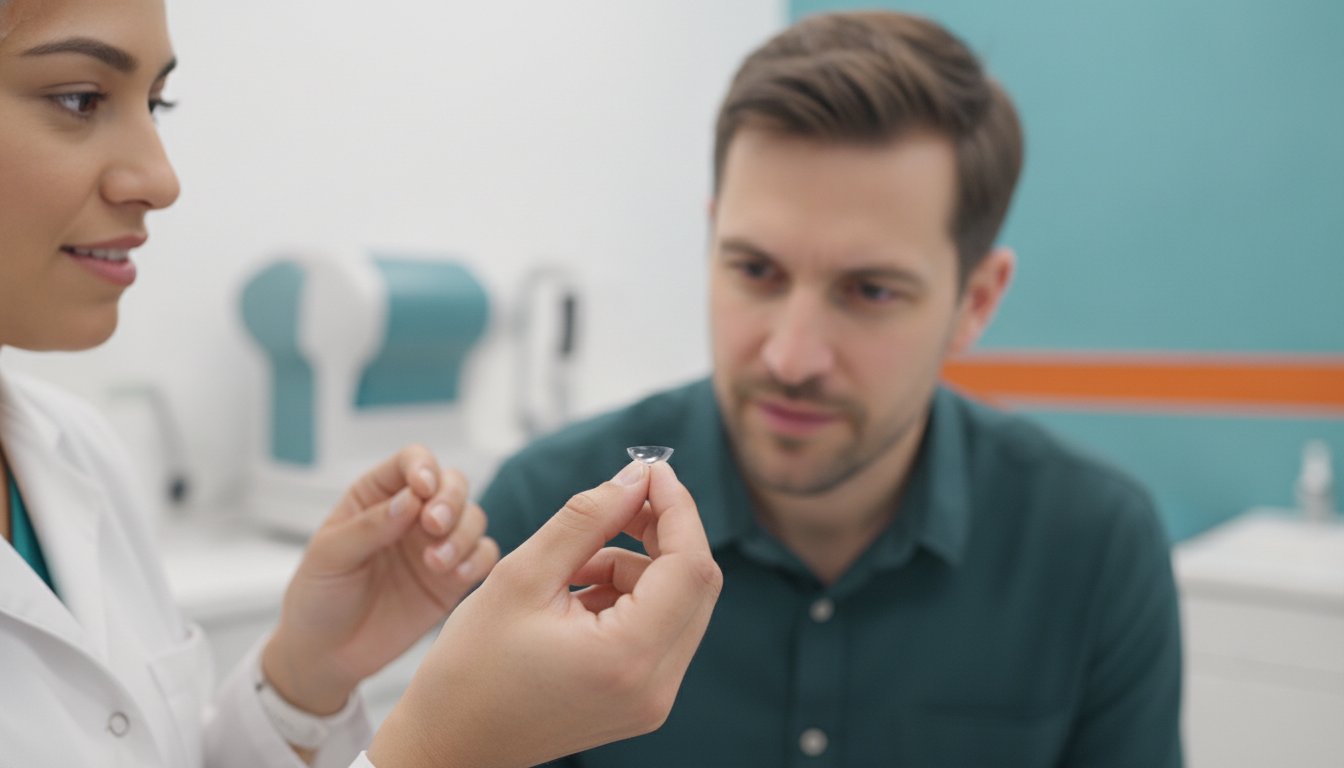
What if your current contact lenses are actually the reason your eyes feel tired and irritated by noon? It's a common frustration to experience midday discomfort or realize that reading a menu has become a struggle as your vision needs change. You shouldn't have to settle for blurry sight or lenses that feel like a constant distraction. At The Eye Centre #YourVisionOurPassion, we believe that your quality of vision is too important to ignore.
Finding the right fit involves more than just a prescription; it's about matching material science to your unique ocular health. This comprehensive guide provides a thorough look at the types of contact lenses available in 2026, including daily disposables and multifocal options designed for those who need clear vision at every distance. You will learn how modern designs prioritize comfort and how a professional fitting can help you achieve premium quality with an affordable price. We'll explore the differences between various replacement schedules and specialty materials so you can feel confident and informed during your next appointment with an experienced optometrist.
Key Takeaways
- Learn about the primary types of contact lenses available in 2026, including soft and silicone hydrogel materials that support long-term ocular health.
- Compare the benefits of daily disposable lenses for hygiene against monthly replacement schedules that offer premium quality with an affordable price.
- Understand why a professional fitting is necessary to achieve a comfortable fit that matches your unique corneal measurements and tear film.
- Discover how multifocal options allow you to see clearly at multiple distances, reducing the need for reading glasses as you age.
- Experience personalized vision care tailored to your lifestyle and ocular needs at The Eye Centre #YourVisionOurPassion.
Primary Categories of Contact Lenses Available
Choosing between the various types of contact lenses available involves more than just reading a prescription. It requires a careful balance between your visual requirements and how your eyes interact with different materials. Modern eye care focuses on the health of the cornea as much as the clarity of the image. For a comprehensive overview of contact lenses, it helps to understand how materials have evolved to support long-term ocular health. At The Eye Centre #YourVisionOurPassion, we prioritize your comfort by selecting materials that respect your eye's natural physiology.
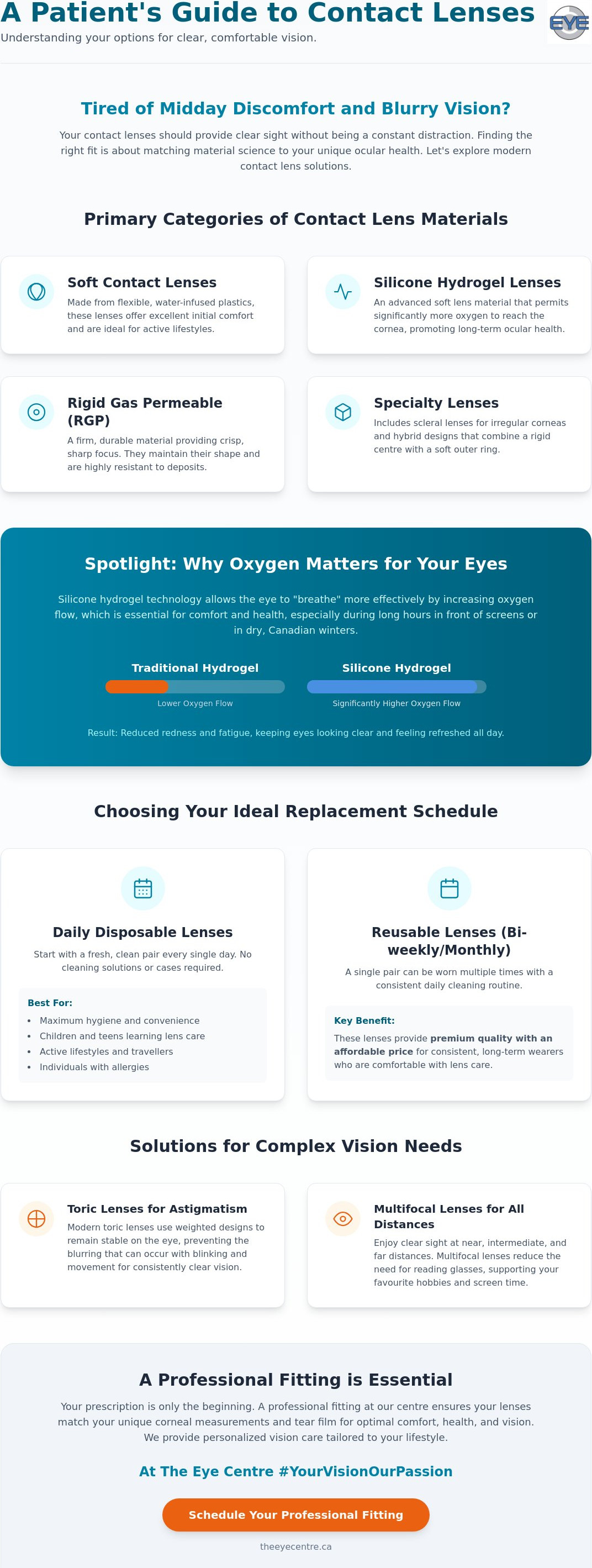
- Soft contact lenses: These are made from flexible plastics that incorporate water to keep the lens supple and comfortable.
- Silicone hydrogel lenses: This specialized soft lens material permits significantly more oxygen to reach the cornea than traditional hydrogels.
- Rigid Gas Permeable (RGP) lenses: These are firm, durable materials that maintain their shape on the eye to provide sharp focus for complex prescriptions.
- Specialty lenses: This category includes scleral lenses for irregular corneal shapes and hybrid designs that combine a rigid centre with a soft outer ring.
Soft Lenses vs. RGP: Which Material Fits Your Life?
Soft lenses provide immediate comfort that most patients realize within minutes of application. Athletes and active individuals often prefer them because they stay securely in place during vigorous movement. While soft lenses are popular for their ease of use, RGP lenses offer distinct benefits. They are a premium quality option with affordable price because they last much longer than soft disposables. RGP lenses don't dehydrate, which helps maintain a consistent tear film. Ensuring high oxygen permeability is essential for keeping the surface of your eye healthy over years of wear.
Modern Silicone Hydrogel Technology
Canadian winters present unique challenges for lens wearers. Harsh outdoor winds combined with dry indoor heating can make traditional lenses feel heavy or irritating. Silicone hydrogel technology allows the eye to "breathe" more effectively by increasing oxygen flow. This material is particularly beneficial for patients who spend long hours in front of digital screens. Reduced oxygen can lead to redness and fatigue, but silicone hydrogel helps keep eyes looking clear and feeling refreshed throughout a demanding workday.
Choosing Lenses Based on Your Vision Needs and Schedule
Your daily routine and specific vision correction needs play a significant role in determining which types of contact lenses available will work for you. Whether you prioritize the simplicity of single-use lenses or require specialized correction for astigmatism, modern optics ensure you don't have to compromise on clarity. Selecting the right lens isn't just about the prescription; it's about how the lens fits into your life. At The Eye Centre #YourVisionOurPassion, we focus on finding a solution that supports your ocular health while meeting your visual goals.
Replacement Schedules: Daily vs. Reusable Lenses
Daily disposable lenses offer a high level of hygiene because you start with a fresh pair every morning. They're an excellent choice for children learning to handle lenses or adults with active lifestyles who don't want to carry cleaning solutions. Monthly and bi-weekly lenses provide premium quality with an affordable price for those who prefer a reusable option. These require a consistent cleaning routine to prevent protein build-up. Consulting the FDA guide to contact lens types helps clarify how these schedules impact eye health. We provide professional contact lens fittings to help you determine which schedule suits your specific environment.
Correcting Complex Vision: Toric and Multifocal Options
If you have astigmatism, modern toric lenses realize stable vision by using weighted designs that stay in place even when you blink. This prevents the blurring that often occurred with older lens designs. For seniors, multifocal lenses provide a practical way to maintain clear sight at all distances without relying solely on reading glasses. You can enjoy your favourite hobbies and see digital screens clearly without the constant need for frames. This technology helps you look and see your best at any age. If you're ready to explore these options, you can schedule a consultation with our attentive team.
Why a Professional Fitting is Essential for Your Ocular Health
Selecting from the various types of contact lenses available is a clinical decision that requires more than just a standard vision prescription. While a regular eye exam determines the power needed to clear your vision, a professional fitting focuses on the physical relationship between the lens material and your eye's surface. Precision is vital because an ill-fitting lens can lead to corneal abrasions or restricted oxygen flow. Our optometrists perform detailed corneal mapping to measure the exact curvature of your eye, ensuring the lens rests securely without causing irritation. At The Eye Centre #YourVisionOurPassion, we believe your quality of vision is too important to ignore, which is why we prioritize these medical measurements.
A thorough evaluation also includes an assessment of your tear film and eyelid health. This step is necessary to confirm that the lens material will remain hydrated and comfortable throughout the day. Before a final prescription is issued, we utilize trial periods. This allows you to realize how the lenses perform in your specific daily environment, whether you are working in a climate-controlled office or enjoying the outdoors. Regular follow-up appointments then allow our team to monitor your ocular health and ensure the lenses aren't causing underlying issues. For more details on lens safety, you can consult the FDA guide to contact lens types.
The Fitting Process at Our Local Centres
- Step 1: You will undergo a comprehensive eye exam to establish your baseline prescription and overall eye health.
- Step 2: We use advanced imaging for corneal mapping and tear assessments to select the ideal lens material and curvature for your unique anatomy.
- Step 3: You begin a trial period to test the fit and clarity, ensuring the lenses provide the comfort you require for all-day wear.
Pairing Contacts with Designer Protection
It is a common misconception that contact lenses provide sufficient protection for your eyes. While they correct your vision, they do not shield the surrounding tissues from UV radiation. We recommend pairing your new contacts with designer sunglasses from trusted brands like Oakley or Ray-Ban to ensure full protection. This combination allows you to look and see your best while maintaining premium quality with an affordable price. You can book an appointment today at our Fort McMurray, Prince Albert, or Yorkton locations to begin your personalized fitting process.
Achieve Clear Vision with a Personalized Fitting
Understanding the types of contact lenses available is the first step toward visual freedom and long-term ocular health. Whether you choose the convenience of daily disposables or specialized multifocal lenses for clear sight at every distance, the right material makes a significant difference in your daily comfort. Serving Fort McMurray since 1979, our team provides expert fittings that prioritize your unique corneal measurements and lifestyle requirements. We also offer an extensive selection of designer frames and sunglasses to complement your new contacts and protect your eyes from UV rays.
At The Eye Centre #YourVisionOurPassion, we believe your quality of vision is too important to ignore. We are dedicated to providing premium quality with an affordable price so you can look and see with confidence. Our attentive staff is ready to help you transition from glasses to lenses with ease. Take the next step toward a clearer perspective today.
Find Your Nearest Location and Book a Fitting
Frequently Asked Questions
Are contact lenses safe for children and seniors?
Yes, contact lenses are a safe option for both children and seniors when they are prescribed through a professional fitting. Children often realize improved confidence and can benefit from myopia management lenses that help slow the progression of nearsightedness. Seniors can maintain their quality of vision with multifocal designs that address age-related reading difficulties. At The Eye Centre #YourVisionOurPassion, we evaluate each patient's ability to handle lenses safely to ensure a positive experience regardless of age.
Can I wear contacts if I have astigmatism or need bifocals?
You can certainly wear contacts if you have astigmatism or require bifocal correction. Modern toric lenses are designed to stay stable on the eye to correct astigmatism effectively; this prevents the blurring that used to occur with older designs. Similarly, multifocal contact lenses provide clear sight at near, intermediate, and far distances for those who would otherwise need bifocal glasses. These specialized types of contact lenses available ensure that complex prescriptions don't limit your choice of eyewear.
Is it okay to sleep in my contact lenses?
You should not sleep in your contact lenses unless your optometrist has specifically prescribed extended-wear lenses for overnight use. Sleeping in standard lenses significantly increases the risk of serious eye infections and corneal ulcers because the cornea receives less oxygen when the eyes are closed. It's vital to follow the replacement schedule discussed during your fitting to protect your long-term ocular health. Your quality of vision is too important to ignore, so always prioritize safety over convenience.
How do I know if my contact lenses are the right fit?
A proper fit is characterized by clear vision, consistent comfort, and a lens that remains centered on the eye during movement. You shouldn't feel the lens after the initial application, and your eyes should not appear red or feel irritated at the end of the day. If you experience persistent blurring or discomfort, it may indicate that the material or curvature isn't optimized for your eye's unique shape. We offer premium quality with an affordable price for follow-up care to ensure all types of contact lenses available at our clinic are performing as intended.


