
That small, firm lump on your eyelid probably appeared without much warning, and now you're not sure whether to wait it out or book an eyelid bump eye exam as soon as possible. It's a question many Canadians face, and the confusion between a stye and a chalazion is completely understandable. They look similar, but they behave very differently, and treating one like the other can slow your recovery or lead to unnecessary discomfort.
You're right to take it seriously. A chalazion is a blocked meibomian gland, not an infection, and while it's rarely dangerous, it can linger for weeks if it's not managed correctly. Mild blurred vision, a persistent lump, or simply the frustration of something visible on your face are all valid reasons to want clear, reliable answers.
This article will walk you through how to identify a chalazion, how to apply warm compresses properly at home, and when it's time to seek professional care so you can recover safely, without scarring or setbacks. At The Eye Centre, #YourVisionOurPassion, your eyelid health matters just as much as your prescription.
Key Takeaways
- A chalazion is a blocked meibomian gland, not an infection - understanding this distinction changes how you treat it and how long recovery takes.
- Consistent warm compress therapy at home is the foundation of chalazion management, but technique and timing matter more than most people realise.
- Booking an eyelid bump eye exam is the most reliable way to confirm your diagnosis and rule out other eyelid conditions that look similar but require different care.
- Persistent or vision-affecting lumps may need professional intervention - knowing when to stop waiting and seek care can prevent complications like scarring.
- The Eye Centre's optometrists in Fort McMurray, Prince Albert, and Yorkton are available to assess eyelid concerns and guide your recovery with attentive, personalised care.
Identifying a Chalazion: Symptoms and Common Causes
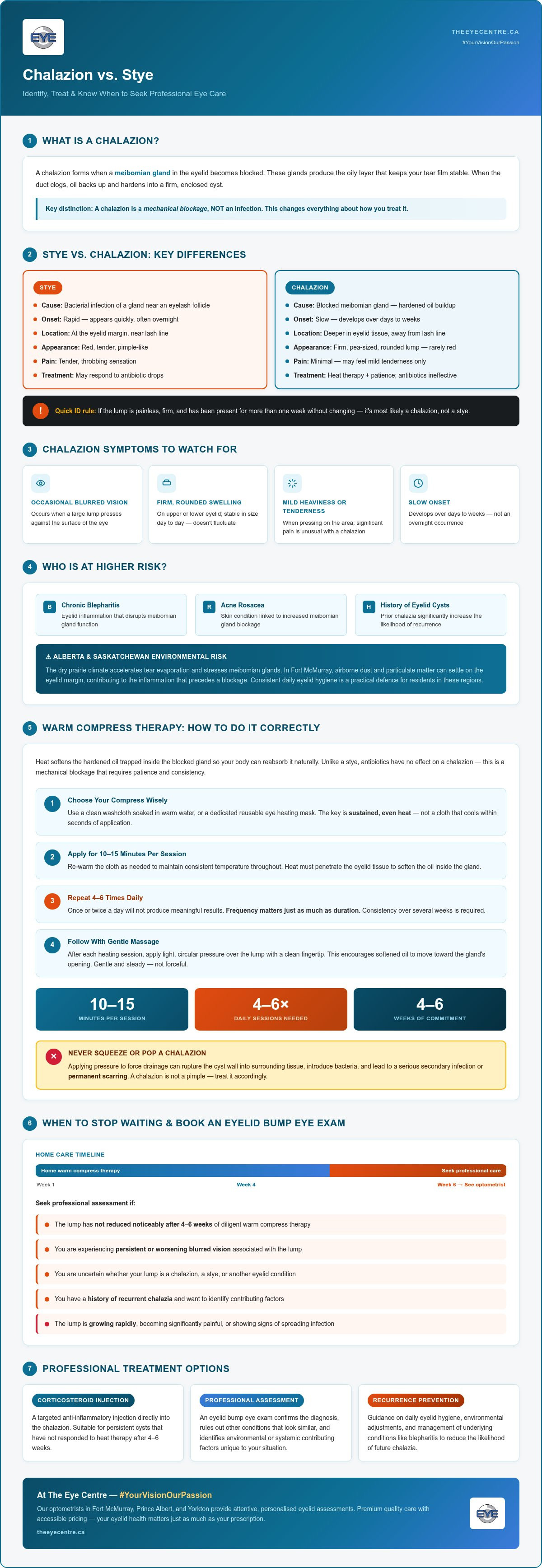
A chalazion forms when a meibomian gland becomes blocked. These glands line the inner edge of your eyelid and produce the oily layer that keeps your tear film stable. When the gland's duct clogs, the oil backs up and hardens into a firm, enclosed cyst within the eyelid tissue itself. The result is a slow-growing, pea-sized lump that feels solid under the skin and typically causes no significant pain.
Common symptoms to watch for include:
- A firm, rounded swelling on the upper or lower eyelid that doesn't fluctuate in size day to day
- Mild eyelid heaviness or tenderness when you press on the area, though outright pain is unusual
- Occasional blurred vision if the lump is large enough to press against the surface of your eye
- Slow onset - a chalazion typically develops over days to weeks, not overnight
Certain conditions raise your risk of developing one. Chronic blepharitis, acne rosacea, and a personal history of previous eyelid cysts all make the meibomian glands more prone to blockage. If you've had a chalazion before, recurrence is genuinely common and worth discussing during an eyelid bump eye exam.
Stye vs. Chalazion: Recognising the Difference
A stye is an acute bacterial infection of a gland near the eyelash follicle. It appears quickly, feels tender or throbbing, and looks red, much like a small pimple at the eyelid margin. A chalazion sits deeper in the eyelid tissue, away from the lash line, and rarely shows redness once the initial inflammation settles. If your lump is painless, firm, and has been present for more than a week without changing, a chalazion is the more likely explanation.
Environmental Factors in Alberta and Saskatchewan
Geography plays a real role here. The dry prairie air across Alberta and Saskatchewan reduces ambient humidity, which accelerates tear evaporation and places ongoing stress on the meibomian glands. In industrial communities like Fort McMurray, airborne dust and particulate matter can settle on the eyelid margin, contributing to the inflammation that precedes a blockage. Consistent eyelid hygiene, including gentle daily lid cleaning, is a practical and underutilised defence for residents in these environments. Booking an eyelid bump eye exam at The Eye Centre gives you a chance to identify whether your local environment is a contributing factor and what steps can help prevent recurrence.
Effective Chalazion Treatment Strategies and Home Care
The goal of chalazion treatment is straightforward: soften the hardened oil trapped inside the blocked meibomian gland so your body can reabsorb it naturally. Heat is the primary tool for achieving this. Unlike a stye, which may respond to antibiotic drops, a chalazion is a mechanical blockage, and clearing it takes patience, consistency, and the right technique.
Step-by-Step Guide to Warm Compresses
Done correctly, warm compress therapy gives the blocked gland its best chance to drain without clinical intervention. Follow these steps carefully:
- Choose your compress wisely. A clean washcloth soaked in warm water works well, as does a dedicated reusable eye heating mask. The key is sustained, even heat, not a cloth that cools within seconds of application.
- Apply for 10 to 15 minutes per session. Re-warm the cloth as needed to maintain consistent temperature throughout. The heat needs time to penetrate the eyelid tissue and soften the oil inside the gland.
- Repeat 4 to 6 times daily. Once or twice a day won't produce meaningful results. Frequency matters here just as much as duration.
- Follow with gentle massage. After each heating session, use a clean fingertip to apply light, circular pressure over the lump. This encourages the softened oil to move toward the gland's opening. Don't press hard; gentle and steady is the right approach.
Consistency is everything. Many people apply compresses diligently for two or three days, see minimal change, and give up. In reality, home care often requires several weeks of daily commitment before the lump visibly reduces in size.
One critical warning: never attempt to squeeze, pop, or drain a chalazion at home. It is not a pimple. Applying pressure to force drainage can rupture the cyst wall into surrounding tissue, introduce bacteria, and lead to a serious secondary infection or permanent scarring on the eyelid. This is a risk that no short-term impatience is worth taking.
When Home Care Is Not Enough
At The Eye Centre, #YourVisionOurPassion, we believe that premium quality care should come with accessible, affordable price points. A clinical assessment of your eyelid concern gives you a clear diagnosis and a personalised plan, so you're not spending weeks guessing. If you're unsure whether your lump warrants a visit, contact our team and we'll help you decide.
Professional Management and Recovery at The Eye Centre
Home care has its limits. If warm compress therapy hasn't produced visible improvement after four to six weeks, or if you're genuinely unsure what you're dealing with, a comprehensive eyelid bump eye exam removes the guesswork entirely. An optometrist can confirm whether the lump is a chalazion, rule out conditions that mimic it, and assess whether the size or position of the cyst is placing pressure on your cornea. That last point matters more than most people realise: a large chalazion can induce temporary astigmatism by distorting the corneal surface, subtly affecting your vision in ways you might not immediately connect to the lump itself.
There are also eyelid conditions that look similar to a chalazion but carry different implications. Sebaceous gland carcinoma, while rare, can present as a persistent eyelid lump that doesn't respond to standard treatment. A clinical assessment at a reputable facility—much like the integrated care provided by TMC General Clinic & Pharmacy—ensures that what you're managing at home is exactly what you think it is.
At The Eye Centre, #YourVisionOurPassion, our optometrists in Fort McMurray, Prince Albert, and Yorkton are equipped to evaluate persistent eyelid concerns and develop a personalised management plan suited to your situation. Premium quality care at accessible price points isn't a compromise; it's the standard we hold ourselves to.
Emergency Eye Care for Sudden Changes
Some changes shouldn't wait weeks for a scheduled appointment. If you notice sudden pain, rapid swelling, significant redness spreading beyond the eyelid, or any shift in your vision, book an emergency eye appointment promptly. A lump that grows quickly over days, or one that returns shortly after resolving, warrants evaluation by an experienced eye doctor to confirm your ocular health isn't at risk.
Booking Your Assessment in AB and SK
Your quality of vision is too important to ignore. Whether you're in Fort McMurray, Prince Albert, or Yorkton, you can contact The Eye Centre to arrange a comprehensive eye check-up and discuss a management plan built around your specific needs. We offer flexible scheduling to fit the demands of busy community members, because attentive care should never be inconvenient to access.
Take the Next Step Toward a Clearer, More Comfortable Recovery
A chalazion is manageable, but it responds best to early, informed action. Consistent warm compress therapy is your first line of defence, knowing the difference between a stye and a chalazion helps you treat it correctly, and recognising when home care isn't enough can spare you weeks of unnecessary waiting.
If your lump is persisting, affecting your vision, or simply leaving you uncertain, an eyelid bump eye exam is the most straightforward path forward. At The Eye Centre, #YourVisionOurPassion, our optometrists have been providing attentive community care since 1979. Emergency eye care is available for sudden or rapidly changing concerns, and our teams in Fort McMurray, Prince Albert, and Yorkton are ready to assess your eyelid health with the thoroughness it deserves.
Premium quality care at accessible price points is what we stand for. Don't let uncertainty slow your recovery. Book an eye exam at The Eye Centre location nearest you and get the clear answers you need to move forward with confidence.
Frequently Asked Questions About Eyelid Bumps and Eye Exams
How long does it take for a chalazion to go away with treatment?
With consistent warm compress therapy applied four to six times daily, many chalazia begin to reduce in size within two to four weeks, though some take as long as six weeks or more to resolve fully. Larger cysts or those that have been present for several months before treatment began tend to take longer. If you're not seeing any visible improvement after four to six weeks of diligent home care, it's time to book an eyelid bump eye exam rather than continuing to wait.
Can I wear contact lenses while I have a chalazion?
In most cases, yes, but with some important caveats. If the chalazion is large enough to distort the shape of your cornea, your contact lenses may sit unevenly and cause blurred or fluctuating vision throughout the day. You should also avoid wearing lenses if the surrounding eyelid tissue is inflamed or if you're experiencing any discharge. When in doubt, switching to your glasses temporarily is the safer choice until the lump has resolved or you've had a clinical assessment.
Is a chalazion contagious to other people?
No, a chalazion is not contagious. It's a sterile, blocked meibomian gland, not a bacterial infection, so there's no risk of spreading it to a family member, partner, or anyone else through contact. You don't need to avoid sharing pillowcases or towels out of concern for transmission. That said, maintaining good eyelid hygiene is still a sound habit for everyone in the household, particularly if blepharitis runs in the family, since that condition can increase the likelihood of gland blockages over time.
What happens if a chalazion is left untreated for a long time?
A chalazion that goes untreated can harden further over time, making it increasingly difficult for the body to reabsorb the trapped oil on its own. In some cases, a large or long-standing cyst can press on the cornea and cause persistent blurred vision. There's also a small risk that an untreated lump may become secondarily infected, leading to more significant swelling and discomfort. If a lump keeps returning in the same location despite resolving, an eyelid bump eye exam is important to rule out conditions that can mimic a chalazion but require different management.


