What if the 20/20 vision you're proud of is actually masking a silent health issue? Many people assume that because they can see the road clearly or read a menu without trouble, their vision health is perfect. It's a common belief that a quick sight test at a retail shop is the same as a professional eyes exam, but this misconception can put your long-term sight at risk. At The Eye Centre #YourVisionOurPassion, we believe your quality of vision is too important to ignore.
You likely realize that regular checkups are important, but confusion over retail screenings and medical necessity often leads to missed appointments. We'll help you understand the critical differences between a simple vision test and a medical evaluation, ensuring you know exactly what to expect during your visit. This guide debunks five common myths about eye health, helping you find premium quality with affordable price while following the recommended schedules for your age and risk factors. From understanding potential costs to knowing how often to visit an optometrist, you'll gain the clarity needed to protect your ocular health for years to come.
Key Takeaways
- Distinguish between a retail sight test and a medical assessment to ensure your entire ocular system is properly evaluated.
- Learn the specific age-based guidelines for a professional eyes exam to protect the vision of infants, students, and seniors alike.
- Discover how non-invasive technology like 3D imaging allows for a detailed map of your eye health during a consultation.
- Balance your family's needs by finding premium quality with affordable price for everything from comprehensive exams to prescription eyewear.
- At The Eye Centre #YourVisionOurPassion, we help you understand the medical necessity of regular checkups to maintain your quality of life.
Myth vs. Reality: Why 20/20 Vision Does Not Guarantee Healthy Eyes
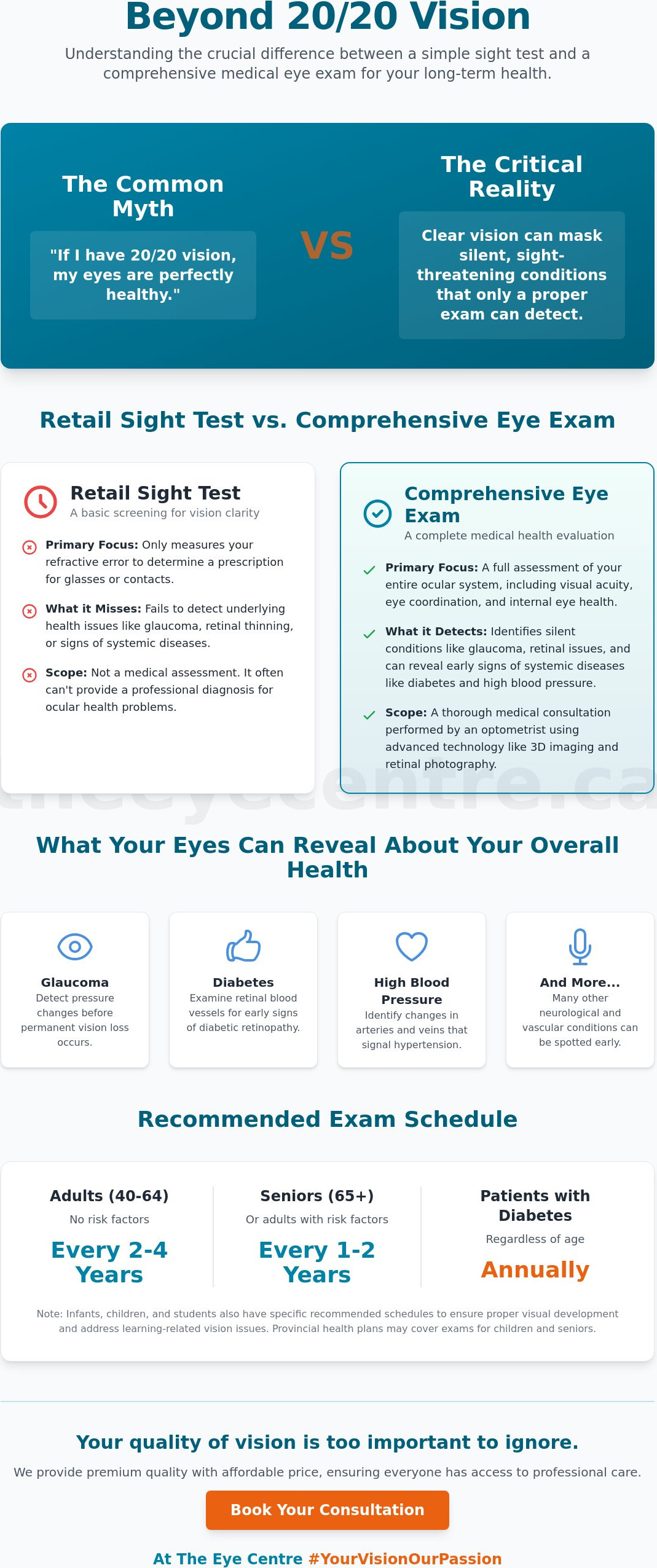
Many people believe that if they can read the smallest line on a chart, their eyes are perfectly healthy. This is a dangerous misconception. A professional eyes exam is a medical assessment of your entire ocular system; it's not just a simple check for a new prescription. While 20/20 vision indicates good visual acuity at a distance, it tells us nothing about your peripheral awareness, eye coordination, or internal health. At The Eye Centre #YourVisionOurPassion, we prioritize a thorough evaluation because your quality of vision is too important to ignore.
Silent conditions like early-stage glaucoma or retinal thinning often present zero symptoms. By the time you notice a change in your vision, permanent damage may have already occurred. This is why a clinical comprehensive eye exam is vital. It differs significantly from a retail sight test, which often only focuses on refraction to determine a lens power. An optometrist examines the actual anatomy of the eye to ensure everything is functioning as it should.
The Limitations of Basic Vision Screenings
A school or workplace screening is not an eyes exam. These tests are designed to identify obvious vision problems but often miss subtle issues. Some industry professionals report that basic screenings can miss a significant number of vision problems in children. A professional diagnosis at an ocular health centre ensures that developmental issues or eye diseases are caught early. We provide premium quality with affordable price to make these essential medical checks accessible for every family.
Detecting Systemic Health Issues Through the Eyes
Your eyes can reveal a lot about your general well-being. During a routine check, an optometrist can identify early signs of systemic health issues like diabetes or high blood pressure by examining the blood vessels in the retina. We use retinal photography to document these findings. This technology allows us to monitor your health over time, ensuring that any changes are addressed before they become serious. This proactive approach helps you look and see your best while protecting your long-term wellness.
Common Misconceptions About Eye Exam Frequency and Necessity
A common mistake is thinking you only need a professional eyes exam if you already wear glasses. This ignores the fact that your eyes change over time, even if your vision feels clear. Regular checkups are about more than just sight; they are about overall health. For adults between 40 and 54 with no risk factors, an exam every 2 to 4 years is recommended. However, once you reach 65, that frequency should increase to every 1 to 2 years to monitor for age-related conditions. If you have diabetes, an annual checkup is essential to manage potential complications.
In 2026, our reliance on digital devices has made eye strain a daily reality. With 91% of people owning smartphones, the constant focus on near-distance screens leads to fatigue and discomfort that shouldn't be ignored. Understanding what a comprehensive exam includes helps patients realize why these visits are essential. It is a detailed look at the health of your eyes that a simple screening cannot provide. You can easily book a consultation at one of our locations to address these modern challenges.
Provincial Coverage and Accessibility in Western Canada
Provincial health plans in Alberta and Saskatchewan often cover the cost of exams for children and seniors. This makes it easier for families to access essential care without financial worry. We provide premium quality with affordable price for those who aren't covered by provincial plans, ensuring everyone has access to professional care. Early intervention for school-age children is particularly important. Many parents don't realize that undiagnosed vision issues frequently lead to learning difficulties that could have been prevented.
Why "Waiting for Symptoms" is a Dangerous Strategy
Waiting for symptoms to appear is a risky strategy. Diseases like glaucoma are often called silent because they don't cause pain or immediate vision changes. Once vision loss occurs from these conditions, it's often permanent. Modern optometry is built on prevention. At The Eye Centre #YourVisionOurPassion, we focus on proactive care rather than reactive treatment. Your quality of vision is too important to ignore, and regular monitoring is the only way to ensure your eyes remain healthy as you age.
What to Expect During Your Comprehensive Eyes Exam
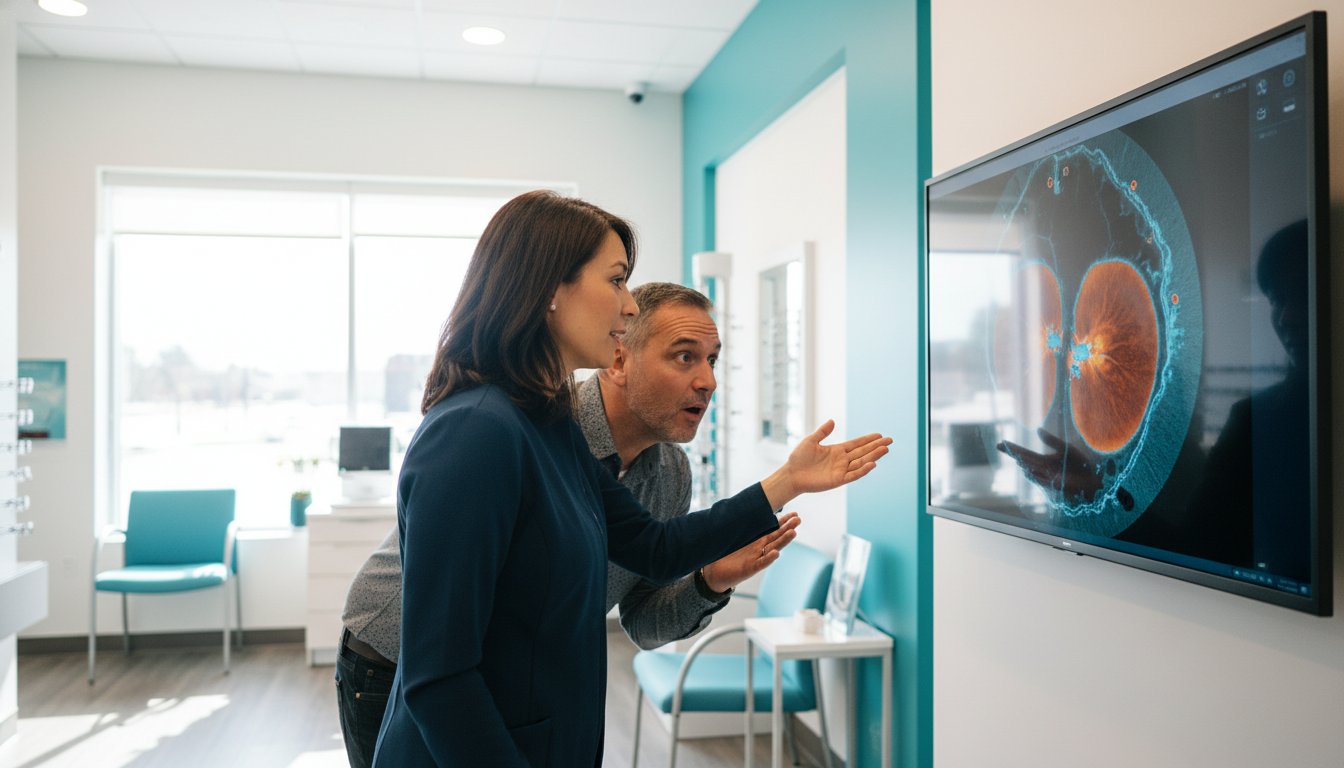
The journey through a professional eyes exam is designed to be thorough and comfortable. It begins with a detailed case history where you discuss your visual needs, family medical history, and any current symptoms. This information provides the context needed to tailor the medical assessment to your specific health profile. We then move into a series of non-invasive tests that map the structure of your eyes. Using advanced 3D imaging, our optometrists can see beneath the surface of the retina to detect early signs of change.
A critical part of the visit is the binocular vision assessment. This check ensures your eyes work together as a coordinated team, which is essential for depth perception and reducing digital eye strain. Following the clinical tests, you'll have a lifestyle consultation. This is where we bridge the gap between medical necessity and daily comfort. Whether you need daily disposable contact lenses for sports or designer frames like Gucci or Tom Ford for the office, we help you find the right fit for your routine.
Advanced Diagnostic Tools at Our Local Clinics
We utilize digital imaging to track your ocular health over time, creating a permanent record of your eye's internal structure. This allows us to notice even the smallest shifts in your health from year to year. Beyond standard checks, our clinics offer specialized services such as dry eye therapy and myopia management for children. You can learn more about the technologies available at our various locations by reading our comprehensive eye exam pillar page.
Preparing for Your Appointment
Getting ready for your visit is simple. To ensure the most accurate assessment, please bring a few items with you:
- Your current prescription eyeglasses or sunglasses
- A list of any medications or supplements you're taking
- A list of any specific vision concerns or symptoms
At The Eye Centre #YourVisionOurPassion, we prioritize patient comfort and clarity throughout the entire process. We believe in providing premium quality with affordable price for our community. When you're ready, you can select a location to book your next professional eyes exam. Your quality of vision is too important to ignore.
Take Control of Your Ocular Health
Protecting your sight requires moving beyond the myth that clear vision always equals healthy eyes. By understanding the medical necessity of a professional eyes exam, you can identify silent conditions before they impact your daily life. Regular checkups are a vital part of your overall wellness routine; they're essential for monitoring the effects of digital eye strain and aging. At The Eye Centre #YourVisionOurPassion, we believe your quality of vision is too important to ignore.
Serving Fort McMurray since 1979, our team provides a thorough assessment that includes advanced diagnostic imaging to track your health over time. We're dedicated to offering premium quality with affordable price to ensure every member of our community receives attentive care. Book your comprehensive eyes exam at one of our locations today and take the next step toward a lifetime of clear vision. We look forward to helping you look and see your best.
Frequently Asked Questions
How long does a comprehensive eyes exam typically take?
A comprehensive eyes exam typically takes between 30 and 60 minutes to complete. This timeframe allows our team to perform a thorough case history and conduct all necessary medical tests for your ocular health. At The Eye Centre #YourVisionOurPassion, we ensure each appointment is efficient while maintaining a high standard of clinical care. If you require specialized testing or a contact lens fitting, the duration may vary slightly depending on your specific needs.
Do I need an eye exam if I just want new designer sunglasses?
Yes, you should have an eyes exam before purchasing new designer sunglasses if your prescription has expired or if you haven't had a checkup within the recommended timeframe. Even if you don't require corrective lenses, a professional evaluation ensures your eyes are healthy enough for the specific tints or polarized coatings you choose. We offer premium quality with affordable price across our entire range of sunwear to ensure you look and see your best.
Will my pupils be dilated during the eyes exam?
Your pupils may be dilated during the eyes exam depending on your specific health needs and risk factors. Dilation allows the optometrist to get a wider view of the internal structures of your eye; however, we also utilize non-invasive digital imaging to monitor your retina. Your doctor will discuss whether this step is necessary based on your clinical history. Many patients find that the temporary light sensitivity is a small trade-off for a thorough health assessment.
Is an eye exam covered by my provincial health insurance in Alberta or Saskatchewan?
Provincial health insurance in Alberta and Saskatchewan generally covers the cost of an exam for children under 19 and seniors aged 65 and older. Additionally, patients with certain medical conditions, such as diabetes or eye emergencies, are often eligible for coverage regardless of their age. We recommend checking with our staff to confirm your specific provincial eligibility before your appointment. At The Eye Centre #YourVisionOurPassion, we strive to make professional care accessible to everyone.
What is the difference between an optometrist and an optician?
An optometrist is a primary healthcare doctor who performs eye exams, prescribes corrective lenses, and manages ocular diseases. In contrast, an optician is a technical professional who specializes in fitting and dispensing prescription eyeglasses and contact lenses based on the optometrist's findings. While the optometrist focuses on your medical health and prescription, the optician ensures your eyewear fits correctly and functions as intended for your daily routine.
Can an eye exam detect health problems other than vision loss?
An eye exam can frequently detect signs of systemic health issues before you experience any physical symptoms. By examining the blood vessels and nerves in the back of the eye, optometrists can identify early indicators of high blood pressure, high cholesterol, and certain autoimmune disorders. This makes your routine visit a valuable part of your overall preventative healthcare. Because your quality of vision is too important to ignore, these exams serve as a vital window into your general well-being.


